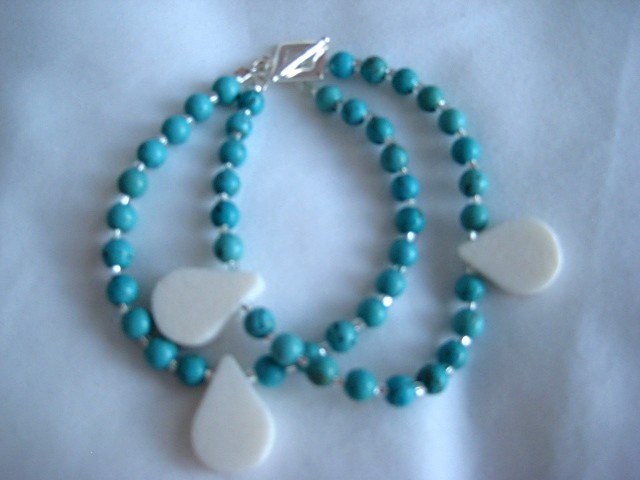
Showing posts with label Bracelet. Show all posts

Saturday, 17 December 2011

Bracelets from Cleapatra to Modern Day


Bracelet popularity dates back to the Roman times and continues today.

Roman bracelets shared many of the design patterns of necklaces and earrings from that era. The ever popular ball earrings from that era were nicely matched with a ball style bracelet. Engraved bangles and snake bracelets were very popular during Roman times.

Bracelets made of twisted coil with lion head ends were common place, as were the two part bracelets ending with a pair of lion heads. The Heracles knot bracelet is recognized as a Roman era piece. The Romans were very creative in the designing of their jewelry. However they still borrowed from Greek motifs.

Palmettos, fleeing dogs and acanthus leaves, all of Greek origin, were often seen in the designing of Roman jewelry.

Stones and glass were often used in Roman bracelets. . Gem stones were commonly found set in eyes. Open bands were cut to represent a row of ivy and entwined with pearls. Many of the leaf and berry bracelets were heavily adorned with decorative glass. The wealthier women could be seen wearing bracelets layered in bezel set emeralds.

During the Gerogiian times bracelets remained popular. Paris jewelers were known for their gold bracelets set with pearl edging. After the 1820s coral became the in fashion statement, so bracelets and other jewelry were heavily set with coral.

During the Gerogiian time it was very fashionable to wear many bracelets at once, including wide ribbon gold mesh bracelets, and silk ribbon bracelets. Gem and Diamond bracelets were designed in geometric patterns. Gold was heavily used during this era.

The Victorian era brought changes to the fashions of women, including jewelry styles. Earrings grew long and dangled, bracelets became rigid and were normally worn in pairs. The buckle bracelet became very fashionable.

The jewelry of the Victorian era expressed sentiment, and bracelets were no exception. Bracelets would contain lockets or charms with pictures or hair of a loved one, and engravings were common

Early Victorian jewelry enjoyed some mystic with hidden meanings being popular. The acrostic bracelets where the first letter of each gemstone spelled a word of friendship were very popular. For example a bracelet set with Lapis, Opal, Vermeil [hessonite garnet] and Emerald would spell Love.

The Art Nouveau period once again saw changes to fashion and jewelry. Chameleons and serpents entwined themselves around bracelets. The mystical Egyptian scarab was found on bracelets and rings. Other popular creatures included dragonflies, butterflies, bees, peacocks, swans, and even bats. This was a very figural period attached to nature.
If jewelry did not depict creatures it depicted flower blossoms or flower buds.

From 1910 to 1939 womens fashions saw sleeveless or short sleeve dresses appear. The result was flexible bracelets and bangles worn on the upper arm. These arm bracelets were often adorned with gemstones or diamonds.

From 1940 to 1949 US designers were greatly influenced by the designs from the French house of Van Cleef & Arpels. Bracelets with ribbon of hexagon lines centered on fine gemstones fastened with heavy clasps became very vogue.

Thursday, 15 December 2011

The Pearl Bracelet of your Dreams

Pearls, the June birthstones, are considered to be one of the most beautiful gems. Because of their natural and elegant beauty, they have been used for centuries in accenting jewelries. Indians and Persians were among the first to use pearls as jewelries.

Pearls can be classified as natural or cultured. Both are grown in oysters or mollusks. Natural pearls are grown accidentally by oysters, as nacre is deposited around any foreign material that has entered its shells. Cultured pearls are also grown in oysters but the growth is initiated by men. Natural pearls, which are rarer, are more costly than cultured pearls.

Both natural and cultured pearls can further be classified into freshwater or saltwater pearls, those coming from the sea being more expensive.

Pearls come in many different colors, shapes and sizes. The value of these pearls depends on these qualities so care in choosing the pearls should be taken seriously.

The timeless beauty of pearls makes them suitable for bracelet creations. But how do you choose the perfect pearl bracelet for you?

If you want to buy the pearl bracelet online, make sure you have done ample research on the different legitimate companies that advertise pearls. Know everything you can about the products, the company's background and return policies. Get the address or phone number that you can contact in case a problem arises.

Once you have chosen the company you want to buy from, view all their designs. There are so many designs to choose from. The latest trend in bracelet design is the contemporary pearl bracelet which could be any of the following.

These bracelets are combined with different metal clasps and chains to make them contemporary. Strands with different colors of pearls may be twisted to make an interesting combination bracelet. Several strands of pearls may also be contrasted with sterling silver to make it unique.

The decorative clasps could serve as the design in itself. Yellow gold beads could alternate with pearls to create a contrasting effect. Pretty charms could hang from the bracelet to add some appeal. Another possible combination would be a series of pearls followed by a silver chain.

Semi-precious gems or even diamonds can be combined with pearls making your bracelet even more valuable. The different colors of other gems make an otherwise simple string of plain white pearls look very interesting. The same attention-grabbing effect can be seen when contrasting colors of pearls are combined together.

White glass pearls would look amazing if combined with Swarovski crystals. The stunning combination is a must-have for a pearl collector.

They are usually sold by carat weight. Most natural pearls on today's market are vintage pearls.

Another factor to consider is the weight of the pearls you are purchasing. Don't forget that natural pearls are measured in carats and cultured pearls are measured in millimeters of their diameters.